





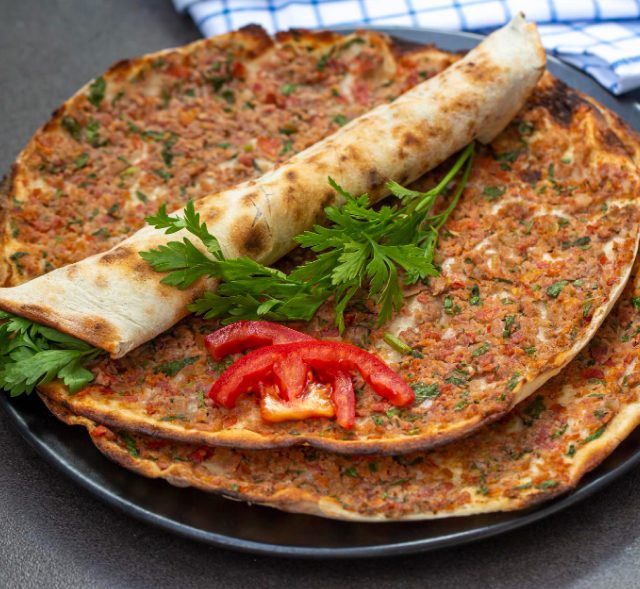
Not Just Turkish Pizza – It's Lahmacun
Often called “Turkish pizza,” lahmacun is a thin, crispy flatbread topped with a spiced blend of minced meat and vegetables. But comparing it to pizza hardly does it justice. With its bold flavors, delicate texture, and cultural heritage, lahmacun stands on its own as a cherished staple in Turkish and Middle Eastern cuisine.
What Does Lahmacun Mean?
The word lahmacun comes from Arabic origins:
“Lahm” means meat
“Ajin” means dough
Together, they form “meat with dough”—a name that sounds simple but leads to a flavor-packed experience. While some regions refer to it as lahmajun, lahmacun remains the more common and widely recognized term, especially in Turkish culinary traditions.
Ingredients that Make It Unique
At the heart of every great lahmacun lies a balance of ingredients that come together in perfect harmony. Here's what you’ll typically find:
Minced lamb or beef
Fresh parsley and onion
Tomato or tomato paste
Garlic
Olive oil
Red pepper paste
Spices: cumin, paprika, black pepper, and chili flakes
This mixture is spread evenly on a thin round of dough, then baked at high heat until the edges crisp and the flavors meld.
Lahmacun vs. Pizza: What Sets It Apart?
While the “Turkish pizza” nickname is catchy, lahmacun is thinner, spicier, and cheeseless. It's rolled rather than sliced, and it’s not overloaded with toppings. Instead, it’s balanced, flavorful, and meant to be enjoyed with fresh accompaniments.
Key Differences
No cheese – Unlike pizza, lahmacun celebrates its meat and spice blend without cheese
Thin and crisp – It’s more like a wrap or cracker than a chewy crust
Eaten rolled up – Usually with parsley, onions, and a squeeze of lemon
Bolder spices – Emphasizing Mediterranean and Middle Eastern flavors
Regional Twists in Turkey
Different cities and regions in Turkey put their own spin on lahmacun:
Gaziantep: Bold, spicy, and chili-forward
Istanbul: Milder, finely blended toppings
Şanlıurfa: Features garlic and deeper tomato tones
These variations show the adaptability of lahmacun across regions and palates.
How to Serve Lahmacun Like a Local
Lahmacun is more than just food—it’s a cultural ritual. Traditionally, it’s served with:
Lemon wedges for a bright, zesty finish
Fresh herbs like parsley or arugula
Thinly sliced onions sometimes with sumac
Ayran – a salty yogurt drink that complements the spices
This combination adds freshness, acidity, and texture, elevating every bite.
Is Lahmacun Vegetarian-Friendly?
While classic lahmacun is meat-based, vegetarian lahmacun has become popular in recent years. With toppings like spiced lentils, mushrooms, or eggplant, it's possible to replicate the dish’s essence without meat—perfect for those seeking vegetarian Turkish food in New Jersey.
Why Everyone’s Talking About Lahmacun
Lahmacun is fast, flavorful, and fun to eat. Whether you're enjoying it in a Turkish restaurant, grabbing a quick lunch, or hosting a Mediterranean dinner night, it’s a crowd-pleaser.
Three Reasons to Love Lahmacun
It’s easy to share, great for groups
The flavors are bold but balanced
It’s light enough to enjoy any time of day
Experience Authentic Lahmacun at Pidde
At Pidde, we bring you the real taste of lahmacun, just like it’s made in the streets of Istanbul or the homes of Gaziantep. Our lahmacun is prepared fresh daily, using traditional recipes, hand-rolled dough, and rich, spiced toppings.
Hungry for authentic flavor? Order lahmacun now from our New Jersey kitchen and bring home a piece of Turkish tradition.